
Although people have a rich amount of gut bacteria, present mainly in the large intestine, the human vitamin B12 uptake system operates in the small intestine. This means you don’t acquire it from your gut bacteria, you have to rely on it being present in the food you eat.
What is Vitamin B12?
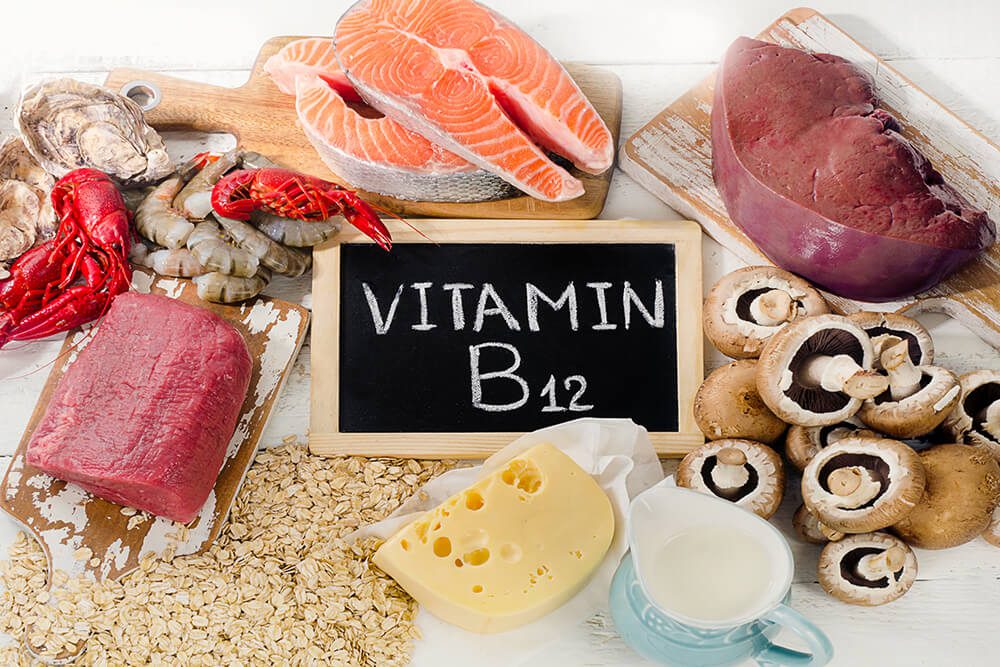
Vitamin B12 is a member of the water-soluble B-vitamin family and, therefore, is an essential nutrient that must be acquired through diet. It contains an atom of the element cobalt at its centre and is naturally present in meat and fish. It’s also available as a dietary supplement.
B12 contributes to your mental health, immune system function, healthy cell division and to reducing tiredness and fatigue.
Dietary Sources of Vitamin B12 and the Causes and Consequences of Deficiency
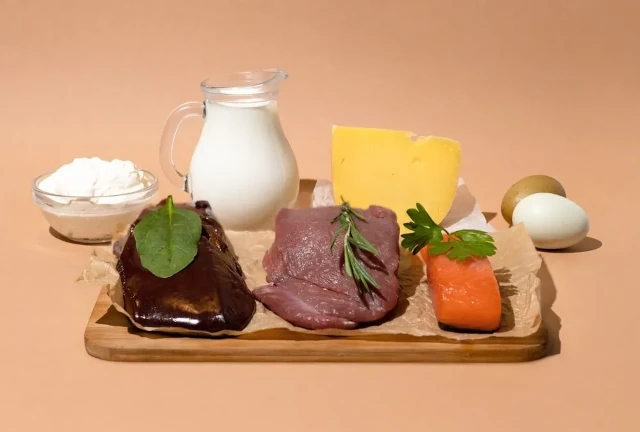
Bacteria are the only organisms capable of B12 biosynthesis and are ultimately responsible for the presence of B12 in animal-source foods including fish, meat, eggs and dairy products. In healthy individuals, nutritional B12 deficiency is uncommon, in part because total body stores in adults can exceed 2500 μg and daily turnover is slow. This means healthy adults have several years’ worth of the vitamin stored in the body.
The RNI for adults is 1.5 μg/day. Mild B12 deficiency in otherwise healthy individuals can be caused by poor dietary patterns that lead to insufficient dietary intake of animal-source foods, which can easily apply to those observing strict vegetarian and vegan diets. It can also be caused by changes in stomach function due to ageing and/or pharmaceutical use. Up to 38% of older adults may exhibit mild B12 deficiency and depleted B12 stores.
The capacity to absorb the vitamin from a food-based diet decreases in older adults and, over time, can result in the food-cobalamin malabsorption syndrome, characterised by mild B12 deficiency, decreased whole body stores and metabolic disturbances. This syndrome can potentially place the individual at greater risk for severe deficiencies.
 Why Does it Matter to You?
- Vitamin B12 is required for proper red blood cell formation, neurological function (nervous system), and DNA synthesis (structure).
- It may also play an important role in reducing the risk of progressive neurological conditions such as Alzheimer’s disease, birth defects, heart disease and certain forms of cancer.
- Studies have shown that an adequate intake of B12, along with folate, may be beneficial in the prevention of birth defects.
- B12 is used by cells in the replication of DNA, which is essential to maintain cellular health.
- It plays an important role in turning fats and proteins into energy, contributing to the reduction of tiredness and fatigue.
- It’s required by the body to form the protective coating around our nerves.
What Happens if You Don’t Get Enough?
Vitamin B12 deficiency is estimated to affect 10%-15% of individuals over the age of 60 but some believe the figure is much higher than that and affects people of all ages.
Coeliac disease may result from – or be exacerbated by – B12 deficiency.
B12 deficiency has been linked to depression in several studies.
Interesting
Natural vitamin B12 is bound in protein and needs stomach acid to free it up. Stomach acid secretion can decrease with age and with the use of stomach acid-reducing medications. This may lead to a need for supplementation as B12 supplements are not bound by protein.
| Vitamin B12 Content of Selected Foods | ||
| Food | Micrograms per serving |
Percent per/day |
| Beef liver, cooked, pan-fried, 3 ounces | 70.7 | 2944 |
| Clams (without shells), cooked, 3 ounces | 17 | 708 |
| Oysters, eastern, wild, cooked, 3 ounces | 14.9 | 621 |
| Nutritional yeast, fortified, from several brands (check label), about ¼ cup | 8.3 to 24 | 346 to 1,000 |
| Salmon, Atlantic, cooked, 3 ounces | 2.6 | 108 |
| Tuna, light, canned in water, 3 ounces | 2.5 | 104 |
| Beef, ground, 85% lean meat/15% fat, pan browned, 3 ounces | 2.4 | 100 |
| Milk, 2% milkfat, 1 cup | 1.3 | 54 |
| Yoghurt, plain, fat-free, 6-ounce container | 1.0 | 43 |
| Breakfast cereals, fortified with 25% of the DV for vitamin B12, 1 serving | 0.6 | 25 |
| Cheese, cheddar, 1½ ounces | 0.5 | 19 |
| Egg, whole, cooked, 1 large | 0.5 | 19 |
| Turkey, breast meat, roasted, 3 ounces | 0.3 | 14 |
| Tempeh, 1/2 cup | 0.1 | 3 |
Dietary Supplements
Vitamin B12 is available in multivitamin/mineral supplements, in supplements containing other B-complex vitamins, and in supplements containing only B12. Multivitamin/mineral supplements typically contain the vitamin at doses of 12 mcg. Even higher (1,000 mcg) in supplements containing only B12.
Health Risks from Excessive Vitamin B12
No upper limits are set for this particular vitamin because of its low potential for toxicity. Even at large doses, B12 is generally considered to be safe because the body doesn’t store excess amounts.
 Vegetarian Sources of Vitamin B12
Top Tip
For vegetarians who eat dairy products and eggs, a healthy diet is the same as for anyone else, but without meat or fish.
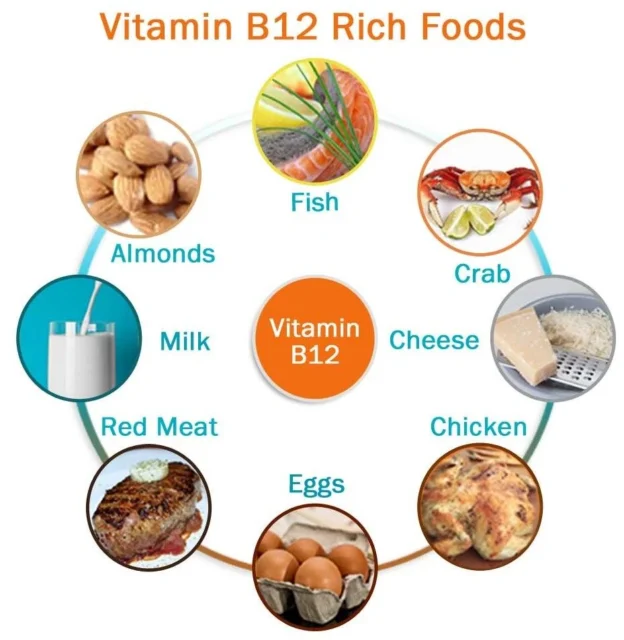
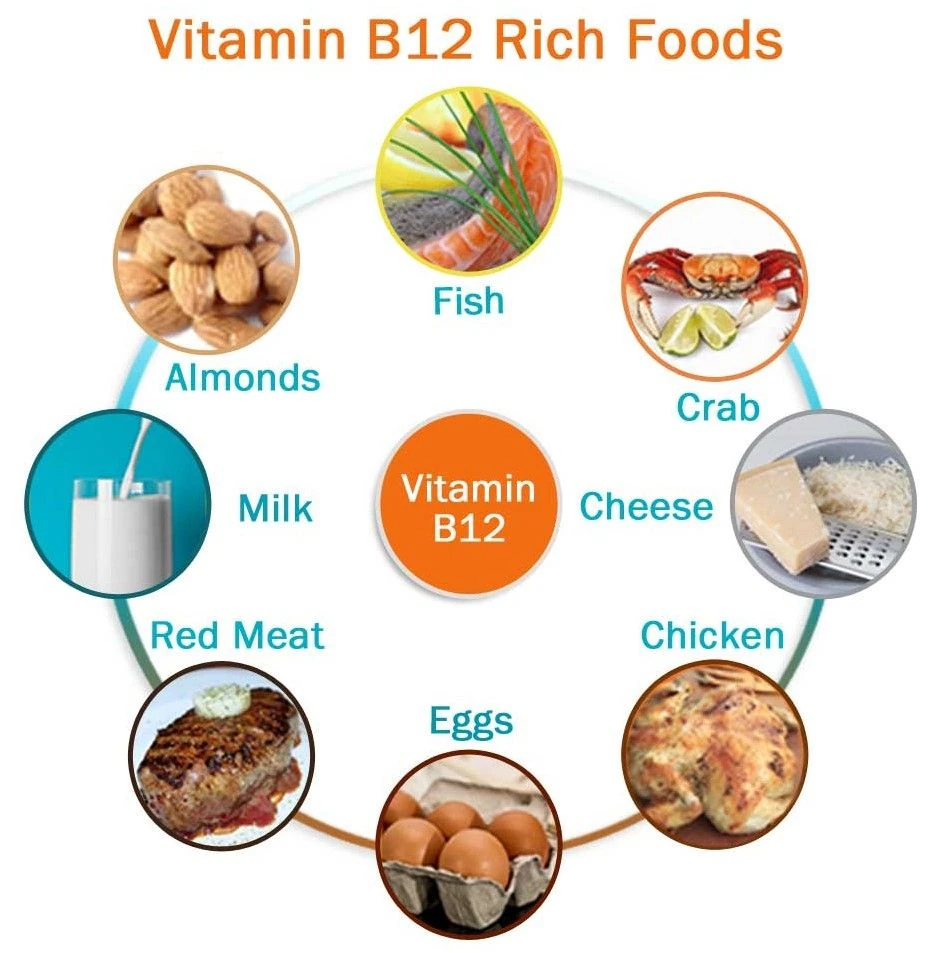
The B12 vitamin is needed for growth, repair and general health. It’s only found naturally in animal products. If you regularly eat eggs or dairy products, you probably get enough. But if you only eat a small amount or avoid all animal products, it’s important to have a reliable source of B12 in your diet. Good sources include:
- milk
- cheese
- eggs
- fortified yeast extracts, such as Marmite
- fortified breakfast cereals
- fortified soya products
Vegan Sources of Vitamin B12
The body needs vitamin B12 to maintain healthy blood and a healthy nervous system and many people get it from animal sources, such as meat, fish and dairy products. Sources for vegans are limited and a vitamin B12 supplement may well be needed.
Best wishes,

Steve Walsh
Nutrition & Health B.A. (Hons)
Liverpool Hope University
